
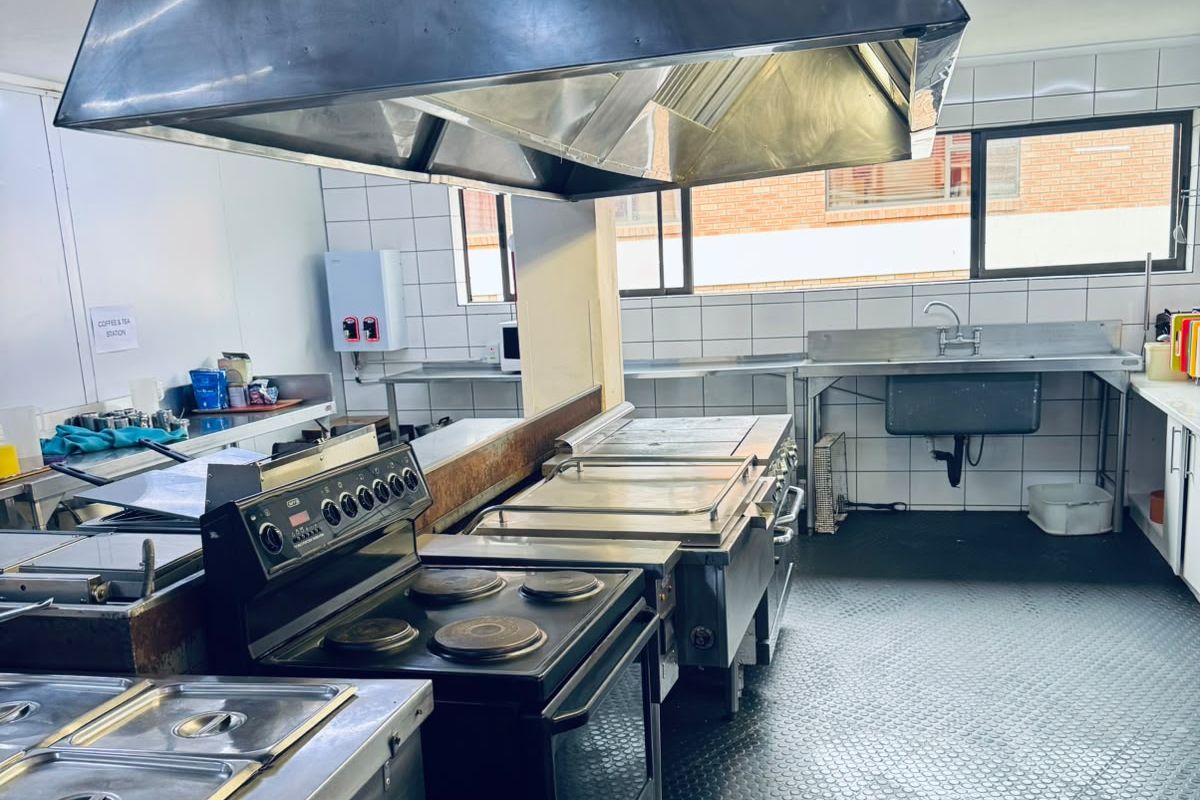
Extraction canopies, filters and ductwork
Grease bakes into a hard layer that only a caustic degreaser will lift. Steam softens it with heat. Several steamers in the range, the XSTEAM 18K and INOX 6000 among them, steam and vacuum in one unit.
How our steamers work
We supply industrial dry steamers across South Africa. Heat and pressure lift the dirt, and very little water goes down.
See the steamer range Answer four questions
Every figure for our steamers is the manufacturer's own.
The mechanism
All bacteria and germs are killed at 100 degrees.
An industrial steamer heats water under pressure in a stainless steel boiler: 8.5 bar on the Optima range, up to 10 bar on the Steam Italy industrial units.
What leaves the gun carries very little liquid water. That is what dry means, and it is why there is so little left on the surface to dry.
A plastic-tank steam mop is a different tool. It wets the floor and lifts very little. Our domestic steamers have a stainless steel boiler like the rest of the range.
8.5 bar operating, 9.5 bar maximum, Optima range. Source: SJE Corporation.
Grease
Cold fat is a solid and warm fat is a liquid, and a liquid runs off into a cloth or a tray. Steam arrives hot enough to move the fat, which is why a canopy filter comes clean without a drum of degreaser.
Protein
Blood, fat and protein bake onto bandsaw housings, mincer augers and the underside of prep tables. Scrubbing moves the top layer and pressure drives it into the joint. Heat softens the bond, so the dirt comes away instead of smearing.
Carbon
Oven floors, rotisseries, proving ovens and bakery racks. Cold methods struggle most with this grime, and the usual answer is somebody's afternoon with a caustic product. Steam softens it with heat, so it comes away with a scraper or a cloth, often without the caustic.
Not sure steam will shift it?
Send us a photoThe heat does the cleaning, and the steam itself needs no chemical. Several steamers can also inject detergent, for the jobs that still want it.
On most hard surfaces and fabrics, no. Keep steam off untreated wood, unsealed stone and open electrics. If you are unsure, send a photo and a specialist will tell you.
Temperature
Boiler temperature is the heat inside the steamer. Gun-tip temperature is what reaches your surface.
At the gun tip
Boiler
Boiler
Boiler
Water
Surfaces
Find the surface closest to yours. Each card opens a sector page where that surface comes up.
Prep tables, bandsaw housings, mincer augers, slicer guards and canopies. Heat lifts fat and protein. The Optima SE II's body is 304 stainless steel as well as its boiler, so it can be washed down where it works.
Commercial kitchensGrout is porous and holds what a mop pushes into it. Steam works the line, not just the tile face, with very little water on the floor.
HospitalityUpholstery, mattresses, curtains, vehicle interiors, foam mats and soft play equipment. Very little water goes in, so very little has to come out.
Healthcare and childcareGuarding, conveyor frames and gearbox housings. You clean in place, without stripping down to reach a bearing or hosing near an electrical enclosure.
Industrial, workshops and plantFloor-to-wall junctions, drain surrounds and the gap under a fixed unit: the places that get missed, and that no cloth reaches.
BakeriesEngine bays, wheel arches, interiors, load bins and cab controls, cleaned with very little water.
Automotive and fleetDoor seals, evaporator fins, condensate trays and the wall junctions behind the stock. You cannot switch a cold room off to clean it and you cannot flood it.
Butcheries and cold roomsPaving, forecourts, bins and yards. The Optima XD, XDm and DMF heat with diesel rather than mains power, and carry their own water. Their pump and controls draw about 0.3 kW, which a small inverter handles.
See the diesel steamersThe full list goes surface by surface, with the steamers that suit each one and the few where steam is the wrong tool.
Grease bakes into a hard layer that only a caustic degreaser will lift. Steam softens it with heat. Several steamers in the range, the XSTEAM 18K and INOX 6000 among them, steam and vacuum in one unit.
Baked-on fat around a fryer well and under a griddle plate is a heat problem, not a detergent problem. Steam releases it without a scouring pad.
The flat top is easy. The weld seams, leg sockets and underside lip are where a swab is taken, and steam reaches into a seam a cloth passes over.
A mop pushes dirt into grout, and every wet clean adds a little more. Steam and a narrow nozzle lift it back out.
The floor-to-wall junction stays wet and is hard to reach. Steam cleans it, and the vacuum takes the dirt up instead of leaving a wet cove behind.
Drains are a known home for Listeria. Hosing moves the problem down the pipe and leaves the slime layer on the gully walls. Steam reaches the gully as heat, not more water.
Washed daily, and still only hand-cleaned inside the housing, the bearing seats and the blade guard. Steam through a narrow nozzle reaches into the housing without stripping it further.
Carbonised sugar and baked-on fat usually mean caustic oven cleaner, a chemical nobody wants near dough. A proofer is warm, humid and jointed, which suits mould, and you cannot soak it.
Dough dries like cement in the bowl seat, the hook mount and the guard, and water turns flour back into dough. Dry steam carries very little water, so it lifts rather than wets.
Always damp, always squeezed, touched by every hand and trolley, and a common place for mould. Steam gets into the folds, and the seal dries quickly.
They sit in the airflow over your stock, so whatever grows on them spreads through the room. A clean coil also runs more efficiently.
Standing water in the dark, where a slime layer forms and nothing disturbs it. Steam does, and the vacuum takes it away instead of onto the floor.
Spills freeze in layers and get chipped off rather than cleaned. Steam releases them without a scraper or a bucket of hot water.
Condensation collects in the junction, and mould follows it. It is high up and skipped on routine cleans. Steam carries very little water, so little runs down the wall.
Belt seams, roller ends and the underside of the return run hold product residue a wash-down misses. Steam runs along the belt without flooding the line.
Glass, gaskets, a chilled deck and a drain, in a unit customers look straight into. Steam cleans the gasket and the deck without flooding the drain.
Everyone agrees it is filthy, and nobody wants the job. Steam cleans it with litres of water, not a hosepipe.
Bed rails, grab rails and door handles. A wipe cleans the flat face, never the hinge, the crevice or the joint. Steam gets into all three.
Turned and vacuumed, but rarely cleaned through, and too slow to wet-clean inside a room turnaround. Steam Italy lists mattresses among the things its steam cleaners clean and sanitise, in its published literature.
Fabric holds odour and cannot take a wet clean inside a turnaround. Steam with an upholstery tool cleans the fabric instead of masking it with fragrance.
Taking them down is why they do not get cleaned. Steam treats them hanging, with a hand tool.
Wet extraction takes hours to dry and often leaves a smell. Steam with extraction uses far less water, so the room is back in use sooner.
Grout and silicone stay damp and go mouldy, and bleach takes out the colour without removing the mould. Steam treats it with heat instead.
Frames, joints, wheels and slings, gripped all day and wiped by hand. Steam reaches the joint and the wheel housing.
Soft play, mats and plastic toys cannot be soaked, and their seams hold dirt. Steam reaches the seam with heat and very little water.
Engines are full of sensors, looms and control units, and pressure washing risks forcing water into the connectors. Dry steam carries very little water and lifts grease with heat, not pressure.
Seats, carpets, headliners and vents. Wet extraction keeps a vehicle off the road for hours. Steam with a hand tool cleans it and the vehicle goes back out.
Brake dust, road film and grease, where a brush does not reach. Steam releases them without the run-off that turns a wash bay into a drainage problem.
Oil, grease and brake dust ground into concrete over years. Steam lifts it with heat instead of spreading it around.
XSTEAM 18K · XD
A fouled coil moves less air and costs more to run. Steam cleans the fin pack without bending the fins the way a pressure nozzle does.
Heat and a controlled nozzle lift paint from masonry with far less solvent than a chemical strip, and without its run-off.
XD · XSTEAM 18K
Heat bursts the cells at the crown of the plant, with no herbicide. It needs repeat treatments, not one.
Burner crowns, trivets and the well underneath collect fat that bakes on every service. Steam softens it in place, so the parts go back on the line instead of into a soak tank.
Frames, side rails, hand controls and the mechanism underneath are handled all day and hard to wipe properly. Steam reaches the joints and the underside of a rail without soaking the mattress or the controls.
Desk tops, chair backs and the underside of a table edge, where hands go. A cloth and a spray bottle get through thirty of them slowly. Steam needs no spray.
Mats and cot frames used by a different child every day, often stacked while still damp, which is how they start to smell. Dry steam puts very little water on them.
Harness webbing, buckle housings and the seams where milk and food collect. Covers are slow to remove and slow to dry once washed. Steam works on the seat as it sits, with very little water.
Grips, handles, benches and pads, touched by one person after another and wiped with the same cloth. Steam cleans the padding and the frame together, with very little water.
Benches, lockers, tiled walls and shower grout that stays damp between uses. Bleach lightens the grout and the smell comes back. Heat treats the surface and the joint together, with very little water going down.
Cushions, canopies and covers live in salt air and never fully dry, so mildew starts in the seams. Dry steam puts heat into the seams without re-wetting the fabric.
Non-slip decking holds grime in its pattern, which a pressure washer misses or erodes. Steam lifts it out of the texture with very little run-off.
Oil mist and dust set into a skin on guards and frames, and a hose cannot go near the bearings and drives. Steam is aimed and carries little water, so the frame is cleaned where it stands.
XE · XSTEAM 18K
Release agent builds up in the detail of a tool and the clamping faces of a jig. Scraping risks the surface, and solvent means handling and disposal. Heat softens the build-up so it comes away.
XSTEAM 18K · XE
Fin packs clog with dust and oil mist, and the unit runs hotter. A brush cannot get between the fins and a pressure washer folds them over. Steam passes through at low pressure and takes the film with it.
XE · XSTEAM 18K
Oil and dust coat housings and valve blocks and hide a weeping seal. You cannot hose the electrics. Steam is aimed, uses little water and leaves the casing readable again.
XE · XSTEAM 18K
Line frames and guarding collect product dust, board fibre and lubricant. The steam itself adds no chemical, and very little water goes down.
Leveller plates take tyre rubber, diesel drips and hydraulic oil, and the lip is where people slip. Hosing sends the oil to the drain. Steam lifts it with heat and very little run-off.
XD · XSTEAM 18K
Line markings grey over under tyre rubber and dust, and high pressure strips the paint with the dirt. Steam is gentler on the coating and cleans the concrete on either side.
Heat and moisture raise the grain and lift an oiled finish, so a worktop needs sanding and re-oiling afterwards. Use a dry method and keep steam away from it.
Not this one. No steamer in either range is the right answer here.
Porous stone takes the moisture in, so the mark goes deeper. Where grout has cracked or gone soft, steam opens the gap further. Seal the stone or repair the grout first.
Not this one. No steamer in either range is the right answer here.
Isolate it first. Steam carries very little water, but very little is not none, and a panel that has to be switched back on is no place to experiment. Clean around it, and let a competent person open it.
Not this one. No steamer in either range is the right answer here.
Nothing in that sector yet. Clear the filter to see everything.
Not sure which one is yours?
Talk to a specialistLimits
It does not remove spores. Clostridium perfringens and other spore-forming bacteria survive surface cleaning with steam. Cooling cooked food quickly, and keeping it hot or cold enough, controls them.
It does not fix food that has already been left out. Steam cleans the surface, not the product.
It does not replace a chemical where a regulation names one. If your protocol specifies a sanitiser, keep it.
It is not the right tool for every job. Sand, heavy mud and beach road grime come off faster with high pressure.
It needs the right distance. Work close in on a bowl, a hook or a guard, and keep back from a drive, a loom or an electrical enclosure. The training covers it.
It needs power. Every electric steamer runs on mains power, and the diesel units still draw 0.3 kW or less.
Tell us what you are up against.
Send us a photo of it. A specialist will tell you what steam will and won't do to it, and which steamer does the job, with a quote.
Talk to us about your site See what it costs you now Or WhatsApp us