Supplying steamers since 2013 ·Supplied and serviced from the Eastern Cape ·Steam Italy (Italy) and Optima (Korea)
The problem
There is one line in a bakery you cannot cross.
Nothing from one allergen batch may reach the next batch.
So water is out.
Flour and water make dough. A wet cloth presses it into the joint of a mixer guard, and every wet clean adds a layer. The proofer is worst: warm, humid, jointed and impossible to soak.
So caustic is out.
Caustic oven cleaner shifts baked-on sugar where detergent won't. It's also a chemical in a room with open dough in it.
So blowing it down is out.
Compressed air puts flour into the air and onto everything else. Flour dust in enough concentration is a recognised hazard in its own right.
Water, caustic and air all move the flour. Steam lifts it out of the seam.
The saving is caustic oven cleaner, contract cleans of the ovens and extraction, and hours of scraping. Caustic and scraping also shorten the life of your trays and equipment. Steam is gentler on them.
Each one is a seam with flour already in it.
Proofer seals
Rack channels
Mixer bowl seat
Tray corners
Extraction ducting
Cable runs
The steamer
Which steamer, and why
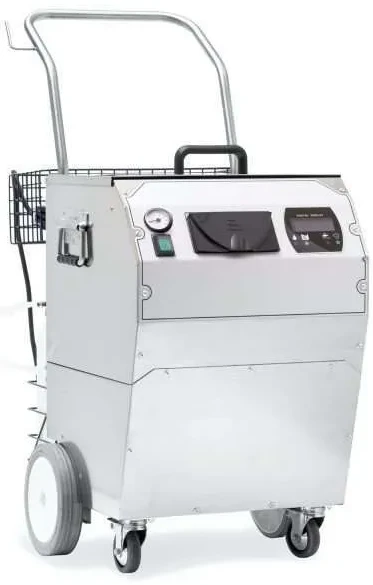
INOX 6000
For trays, racks and mixer guards. It draws around 14 A, so an ordinary 16 A socket runs it.
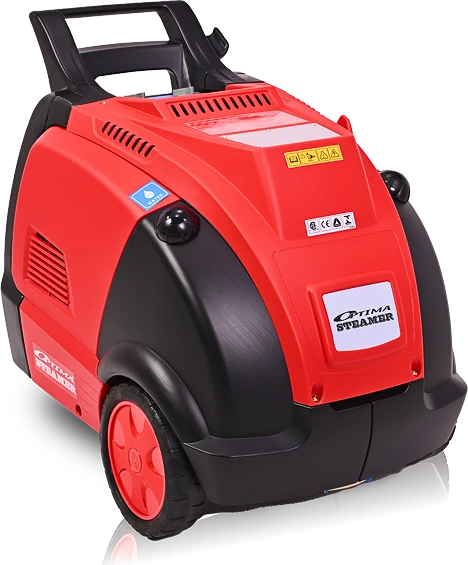
EST
For oven fronts, proofer doors and trays, run after run. On single-phase, the 05K draws around 22 A, so it needs its own circuit rather than a shared wall socket, and it takes 21 to 23 minutes to reach pressure.
For kitchens, butcheries, bakeries, guest houses and creches. It steams and vacuums in one unit, runs off an ordinary plug, and draws its steam from an AISI 304 stainless steel boiler.
For a bakery or a factory floor. Its smallest size, the 05K, is the only electric Optima that runs on single-phase power, and the EST can be plumbed into the mains water supply.
A method that lifts and extracts, rather than spreading, is relevant to your allergen plan. Whether it satisfies that plan is for whoever wrote it. R638 sets the standard the building is held to, it does not name a cleaning method, and no supplier can honestly tell you that a machine satisfies it.
What R638 and the certificate ask for
R638, the food premises regulations
It sets the standard your premises is held to and does not name a cleaning method. No supplier can tell you that a particular machine satisfies it. What a machine can do is make the surfaces it covers easier to keep at that standard.
Your cleaning method alone does not decide whether you get the certificate. What the inspection looks at includes your surfaces, your equipment and your records, and a documented cleaning process helps with all three.